
Zekiizo and the space between exposure and control
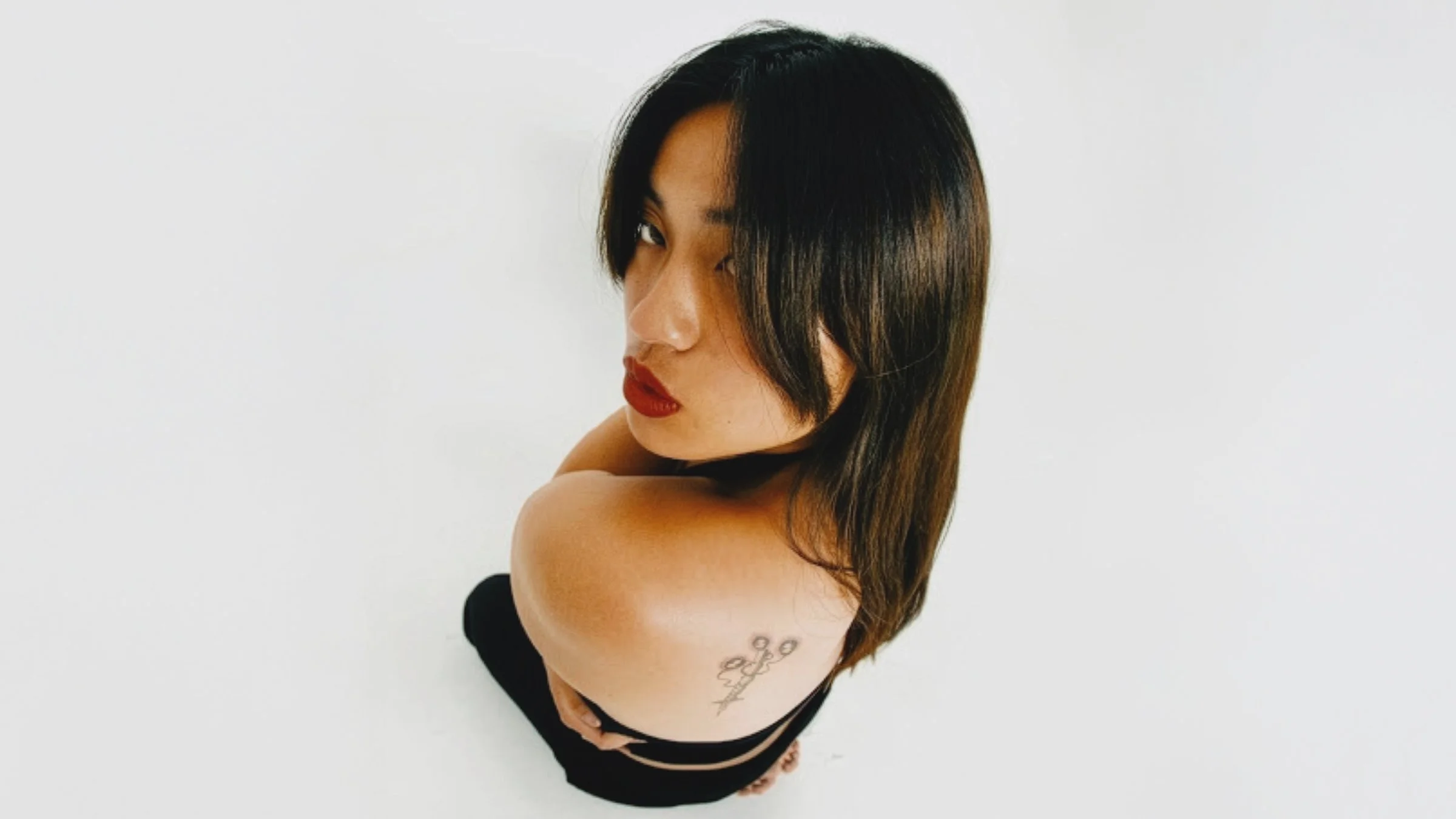
Zekiizo appears impossible to imagine in private because her public presence feels total, bodily, consuming. Onstage and on screen, she occupies the centre of her own aesthetic with a kind of muscular certainty, using her body less as ornament than as engine. She does not drift into view. She asserts herself into it. That force makes privacy seem almost incompatible with the figure she presents. And yet the more compelling question is not whether there is a hidden version of Zekiizo somewhere behind the scenes, but whether privacy is precisely what makes that intensity possible in the first place. The temptation is to frame this as a split between person and character, to assume that what we are seeing is a constructed self standing in for something more fragile or withdrawn. But that reading feels too simple, and ultimately misleading. What Zekiizo offers is not an escape into performance but a negotiation with exposure. The figure we encounter is not someone else. It is a version of the same self, tuned differently. Heightened, compressed, sharpened. In that sense, the performance does not replace intimacy. It regulates it. The intensity is not accidental. It is measured, contained, and deployed with intent, as if she understands that unfiltered access is not the same as truth.
This distinction matters because her use of the body is often misread as pure provocation. In reality, it functions more like architecture. Her physicality holds emotional weight in place, giving shape to impulses that might otherwise spill outward without control. Desire, anger, humour, and vulnerability all circulate within a structure she defines. Rather than offering raw access, she builds a system in which feeling can be expressed without becoming consumable. The result is not distance, but a different kind of closeness, one that resists collapse and refuses the demand to be endlessly legible. There is also a quieter psychological logic at play. Artists whose presence feels overwhelming are often assumed to be exhibitionists, when in fact the opposite can be true. Total presentation can be a way of maintaining boundaries rather than dissolving them. By deciding how intensity appears, Zekiizo retains authorship over it. She controls the terms of engagement. What looks like exposure is in fact a form of containment, a way of preventing the self from being scattered across interpretation, commentary, and expectation. The body becomes not a site of surrender, but a tool of discipline.
Placed against the current cultural backdrop, this approach feels quietly oppositional. We are living through an era that equates authenticity with exposure, where the expectation is constant access to the inner self. Artists are encouraged to narrate themselves endlessly, to clarify their intentions, to flatten complexity into digestible confession. Transparency is treated as a moral good, and privacy as something faintly suspicious. Zekiizo resists that economy. She does not explain herself into existence. She does not dissolve the boundary between inner life and public presence. Instead, she insists on the space between them, and treats that space as active rather than evasive. What emerges from this refusal is a form of tension that feels increasingly rare. The audience is not invited to decode her, nor reassured with emotional conclusions. There is no promise of resolution waiting just out of frame. This can be uncomfortable, particularly in a culture trained to read art as a series of clues leading back to the person who made it. Zekiizo offers no such map. The performance does not lead inward. It holds its ground. The intensity remains where it is, unapologetically self-contained.
This is where the idea of duality becomes misleading. There are not two Zekiizos in conflict with one another. There is one self operating across different registers, each with its own rules. The public figure is not more real than the private person, nor is the private self a hidden truth waiting to be uncovered. They coexist because they serve different functions. One allows expression. The other allows survival. Neither cancels the other out. That balance gives her work its particular charge. What we are watching is not someone losing control, but someone exercising it very carefully. The performance is intense because it has limits. The exposure feels electric because it is chosen. In refusing to give everything away, she creates a presence that feels fuller rather than guarded. The figure remains intact, not because she is hiding, but because she understands what happens when everything is made available at once. In that sense, Zekiizo’s stance feels less like a provocation and more like a proposition. It suggests that autonomy does not require retreat, and that visibility does not have to mean surrender. The space between exposure and control is not an absence. It is a working zone. And it is there, in that tension she refuses to resolve, that her work finds its most lasting power.